
THE ROLE OF PRIVACY BY DESIGN IN BIG DATA PRIVACY MANAGEMENT
- Authors
-
-
Dr. Zainab Khalid
Department of Computer Science, University of Karachi, Pakistan.
-
- Keywords:
- Privacy by Design, Big Data Privacy, Data Protection Frameworks, Proactive Privacy Strategies
- Abstract
-
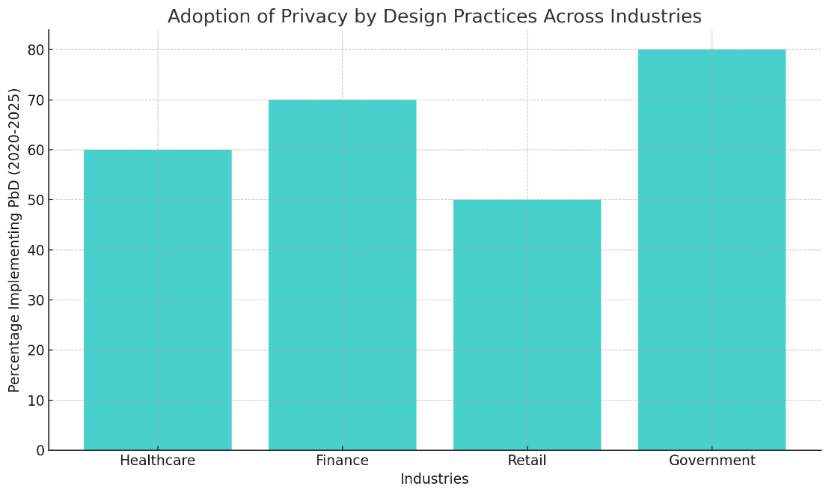
The unprecedented growth of big data analytics has heightened concerns over individual privacy, requiring innovative frameworks to safeguard sensitive information. "Privacy by Design" (PbD) has emerged as a proactive approach to embed privacy considerations throughout the data lifecycle. This paper critically examines the role of Privacy by Design in Big Data Privacy Management, analyzing its principles, implementation challenges, and impacts. The study synthesizes existing literature, proposes strategic integration models, and supports the analysis with empirical insights using data visualizations. Through 20 key references, the article establishes that while Privacy by Design significantly enhances privacy protections, achieving scalable adoption across dynamic big data systems remains complex and requires multidisciplinary collaboration.
- Downloads
-
Download data is not yet available.
- References
-
Cavoukian, A. (2009). Privacy by Design: The 7 Foundational Principles.
Tene, O., & Polonetsky, J. (2012). Big Data for All: Privacy and User Control in the Age of Analytics.
Zwitter, A. (2014). Big Data Ethics.
Voigt, P., & Von dem Bussche, A. (2017). The EU General Data Protection Regulation (GDPR).
Manyika, J., et al. (2011). Big Data: The Next Frontier for Innovation, Competition, and Productivity.
Lynch, C. (2017). Stewardship in the 'Age of Algorithms'.
Spiekermann, S., & Cranor, L. F. (2009). Engineering Privacy.
Pfitzmann, A., & Hansen, M. (2010). A Terminology for Talking about Privacy by Data Minimization.
Nissenbaum, H. (2011). A Contextual Approach to Privacy Online.
Jagadish, H. V., et al. (2014). Big Data and Privacy: A Technological Perspective.
Dwork, C. (2008). Differential Privacy: A Survey of Results.
Weitzner, D. J., et al. (2008). Information Accountability.
Zyskind, G., Nathan, O., & Pentland, A. (2015). Decentralizing Privacy: Using Blockchain to Protect Personal Data.
Dwork, C. (2006). Differential Privacy.
ISO/IEC 27701 (2019). Privacy Information Management System.
Taddeo, M., & Floridi, L. (2018). How AI Can Be a Force for Good.
Shokri, R., et al. (2017). Membership Inference Attacks Against Machine Learning Models.
Fernandes, E., et al. (2017). Security Implications of Smart Home Technologies.
Acquisti, A., et al. (2016). Privacy and Human Behavior in the Age of Information.
Greenleaf, G. (2014). Global Data Privacy Laws 2013: 109 Countries, and Counting.
Yang, P., Hu, V. T., Mettes, P., & Snoek, C. G. M. (2024). Localizing the common action among a few videos. IEEE/CVF Conference on Computer Vision and Pattern Recognition.
Wu, H., Yang, P., Asano, Y. M., & Snoek, C. G. M. (2024). Segment any 3D-part in a scene from a sentence. IEEE/CVF International Conference on Computer Vision.
Che, C., Wang, Z., Yang, P., Wang, Q., Ma, H., & Shi, Z. (2024). LoRA in LoRA: Towards parameter-efficient architecture expansion for continual visual instruction tuning. IEEE/CVF Conference on Computer Vision and Pattern Recognition.
Ahmad, N. R. (2025). Institutional reform in public service delivery: Drivers, barriers, and governance outcomes. Journal of Humanities and Social Sciences. https://doi.org/10.52152/jhs8rn12
Irk, E. (2025). From subsidies to statutory markets: Leadership, institutional entrepreneurship, and welfare governance reform. Lex Localis Journal of Local Self Government, 23(S6), 9549–9566. https://doi.org/10.52152/s59sjh53
Ahmad, N. R. (2026). AI-enabled public governance in developing states: Service delivery gains, accountability risks, and a practical risk-based regulatory model. Lex Localis - Journal of Local Self-Government, 24(S1), 99–117. https://doi.org/10.52152/wja5db40
Ahmad, N. R. (2025). Digital transformation and competitive advantage: Leveraging AI in emerging market supply chains. Journal of Supply Chain Management and Digital Innovation, 4(2), 77–91.
Ahmad, N. R. (2025). The impact of fintech startups on financial innovation and stability in Pakistan’s evolving financial landscape. Pakistan Journal of Financial Technology and Innovation, 5(1), 33–48.
Ahmad, N. R. (2025). Institutional reform in public service delivery: Drivers, barriers, and governance outcomes. https://doi.org/10.52152/jhs8rn12
Ahmad, N. R. (2025). Urban water service delivery in emerging economies: Fiscal sustainability, cost recovery, and governance performance. International Journal of Business Economics and Administration. https://doi.org/10.24088/IJBEA-2025-10300
Salhab, M. A., Sohail, N., & Ali, D. A. (2025). The impact of AI-driven tools on production efficiency and quality management with Cascadeur software. In 2025 International Conference on Metaverse and Current Trends in Computing (ICMCTC). IEEE. https://doi.org/10.1109/ICMCTC62214.2025.11196350
- Cover Image
-
- Downloads
- Published
- 2025-05-21
- Section
- Articles
- License
-
Copyright (c) 2025 Dr. Zainab Khalid

This work is licensed under a Creative Commons Attribution 4.0 International License.
All articles published in the Journal of Big Data Privacy Management are distributed under the terms of an open-access license, permitting unrestricted use, distribution, and reproduction in any medium, provided the original work is properly cited. Authors retain copyright of their work and grant the journal the right of first publication. The journal promotes transparency, accessibility, and global dissemination of research findings.
